

Why Your Home Feels Off (Even When the AC Is Running)
Let me ask you something: have you ever walked into one room and it feels perfect…then the next room feels completely different? Most people assume it’s their AC. It’s not. It’s the ductwork.
We see this all the time at Air National, systems running fine on the surface, but quietly losing air, efficiency, and performance behind the walls. And here’s the part most homeowners don’t realize:by the time you feel the problem, it’s already been costing you money for months.
What’s Really Going On Behind Your Walls
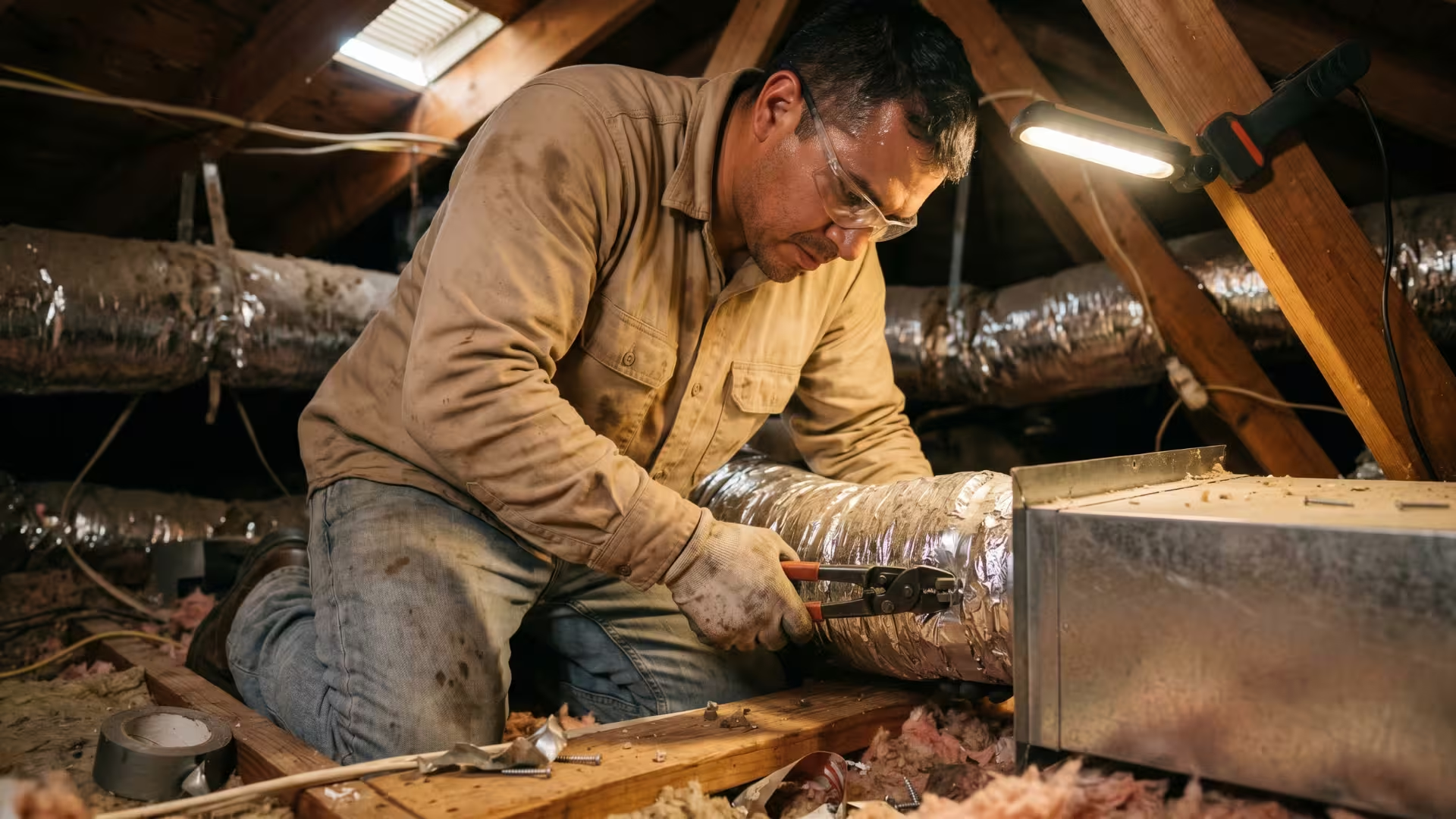
Your duct system is supposed to move air efficiently through your home. But over time, it breaks down. Not dramatically. Quietly. Small gaps form. Connections loosen. Materials wear out.
And suddenly:
- Up to 30% of your air is escaping
- Dust and insulation particles get pulled into your airflow
- Your system runs longer just to keep up
That’s why your energy bill creeps up even when nothing “seems wrong.” And it’s why your home never feels consistently comfortable.
The 5 Signs Your Air Ducts Need to Be Replaced
This is where most blogs stay vague. Let’s make it real.
1. Some Rooms Never Feel Right
Too hot. Too cold. Never consistent. That’s not your thermostat, it’s an airflow imbalance.
2. Your Energy Bills Keep Climbing
Even when usage hasn’t changed. Leaky ducts = wasted air = wasted money.
3. You Notice More Dust Than Usual
Dust builds up faster, even after cleaning. That’s often coming from inside your duct system.
4. Your HVAC Runs Longer Than It Should
Long cycles = your system compensating for lost air. That’s added wear and tear you’re paying for later.
5. Your Ductwork Is 10–15+ Years Old
Older ducts break down, especially flexible ones. At a certain point, repair doesn’t make sense anymore. Replacement does.
The Real Cost of Waiting
Here’s where homeowners make the mistake. They wait until something fails. But duct issues don’t fail loudly, they drain your system slowly.
Every month you wait:
- You overpay on energy
- Your system works harder
- Your indoor air quality gets worse
That’s why the smartest homeowners don’t wait for problems. They stay ahead of them.
WE FIND THE PROBLEM BEFORE YOU FEEL THE PROBLEM. That’s how you avoid the expensive version of this.
What Smart Homes Are Doing Differently
This is where things have changed. Today, your home doesn’t have to guess anymore.
With smart monitoring, your system can actually track:
- Airflow inconsistencies
- Performance drops
- Early warning signs
Think of it like a check engine light but for your entire home. Instead of reacting, you get ahead of problems before they turn into repairs.
Your Home Is a System, Not Just an AC Unit
Here’s the shift most people miss: Your comfort doesn’t come from one thing.
It comes from everything working together:
- HVAC system → produces air
- Ductwork → delivers it
- Filtration → cleans it
- Monitoring → protects it
When one part fails, everything suffers.
That’s why solutions from America’s Smart Homes and Businesses focus on the full system, not just quick fixes.
What This Looks Like in Real Life
We’ve seen this play out hundreds of times:
A homeowner calls about high energy bills. We checked the system and the unit looks fine. Then we test the ducts. Air loss. Poor airflow. Hidden inefficiency. Fix the ductwork.
Bills drop. Comfort improves. System stress goes down. Same home. Completely different performance.
What You Should Do Next
If any of this sounds familiar, don’t ignore it.
Start here:
- Pay attention to uneven temperatures
- Watch your energy bills closely
- Ask about duct condition during your next service
- Don’t assume the AC unit is the problem
And most importantly…stop waiting for something to break.
Take Control Before It Gets Expensive
If your home isn’t feeling right, there’s a reason. And it’s usually not what you think.
Call Air National at 281-251-3143 or explore smarter solutions at America’s Smart Homes and Businesses.
Stop wasting money on hidden problems. Start fixing the system behind the system.
