

What Most Homes Are Quietly Building Up
Here’s the part most people miss. Your dryer could be working right now and still be building up a problem behind your walls. No noise. No warning. No alert. Just heat, lint, and airflow slowly getting worse with every load.
And the scary part? This happens in clean homes too. You can vacuum, dust, keep everything spotless and still have a dryer vent that’s becoming a fire risk without you knowing.
That’s what makes this dangerous. It doesn’t look like a problem…until it is.
What’s Actually Going On Inside Your Dryer Vent
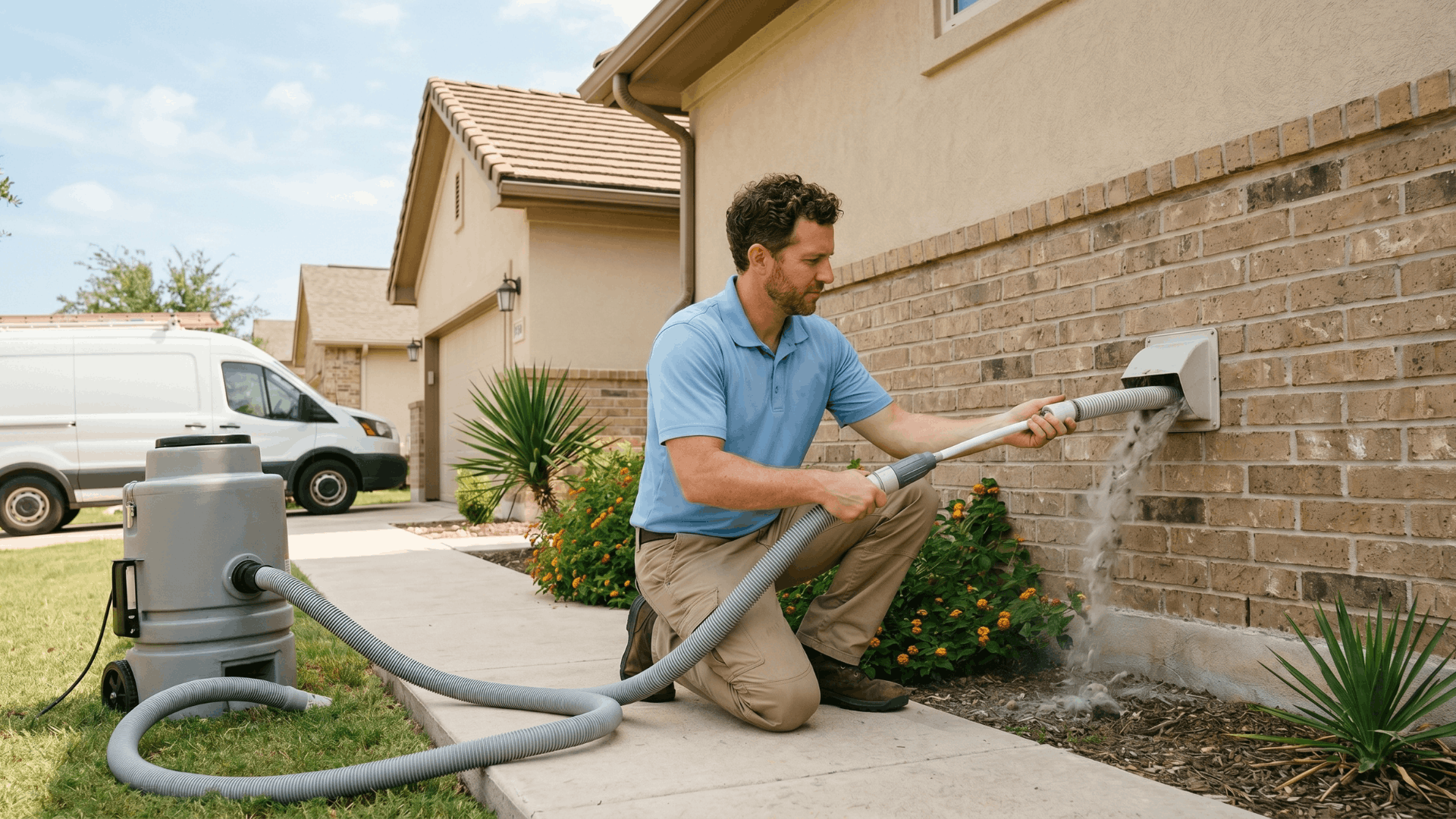
Every time you run your dryer, lint gets pulled into the vent system. Your lint trap catches some of it. Not all of it. The rest builds up inside the duct layer by layer.
Over time:
- Airflow gets restricted
- Heat gets trapped
- Your dryer works harder
- Drying time increases
And this is where things start to shift. What used to take 45 minutes now takes 70. Your dryer feels hotter. Your energy bill creeps up. And behind the scenes, that trapped lint becomes fuel.
This is why dryer vents are one of the leading causes of preventable home fires. Not because people ignore them, because they don’t realize what’s happening.
Waiting Is What Makes It Expensive
Most homeowners follow the same pattern. They wait.
They wait until:
- Clothes take too long to dry
- The dryer feels off
- Something smells wrong
By then, the system had already been struggling for months. That’s the reactive path.
It leads to:
- Higher utility bills
- Shortened appliance life
- Emergency service calls
Now compare that to a proactive homeowner. They don’t wait for signs. They maintain airflow before problems show up. They treat their home like a system, not a set of separate parts. That’s the difference.
And it’s the idea behind how America’s Smart Homes and Businesses approaches home care: WE FIND THE PROBLEM BEFORE YOU FEEL THE PROBLEM.
So…How Often Should You Clean It?
Here’s the honest answer. More often than you think.
For most homes:
- Once a year is the minimum
- Every 6–9 months is better for families
- Every 3–6 months if you have pets or heavy laundry use
But here’s the smarter way to look at it: Don’t rely on time alone. Watch your system.
If you notice:
- Longer drying times
- More heat than usual
- Lint around the vent
- A slight burning smell
You’re already late. That buildup doesn’t happen overnight. It’s been forming for a while.
Why This Happens Even in “Normal” Homes
This isn’t about neglect. It’s about design. Dryer vents are long. They have turns. They trap lint naturally.
Even a well-maintained home will deal with this over time. That’s why this isn’t a “maybe” problem. It’s a “when” problem. The only question is whether you catch it early or deal with it late.
The Smarter Way to Stay Ahead of It
Most people rely on guesswork. But your home doesn’t have to work like that anymore. With smart monitoring from America’s Smart Homes and Businesses, your home starts acting more like a system. Think of it like a check engine light. Instead of waiting for something to feel wrong, you get signals early.
It tracks:
- Airflow changes
- Performance drops
- Unusual system behavior
So instead of reacting…you’re preventing.
This Is Bigger Than Just a Dryer
Your dryer vent is one piece of a bigger system. When airflow is restricted anywhere in your home, it affects everything.
That includes:
- Your HVAC system
- Your energy usage
- Your indoor air quality
This is why Air National doesn’t look at problems in isolation. We look at how your home performs as a whole.
Cleaner airflow → better efficiency → healthier air → lower costs
That’s the chain reaction most homeowners never see.
Real Situations We See All the Time
A homeowner calls because their dryer is “just slow.” We check the vent, it’s nearly blocked. Cleaning it cuts drying time almost in half.
A family notices their laundry room feels hotter than usual. The vent is trapping heat. Fixing it improves airflow instantly.
A homeowner schedules routine maintenance. We catch buildup early before it becomes a safety issue. No emergency. No stress. No surprise costs. That’s what prevention looks like.
What You Should Do Next
Keep this simple.
- Clean your lint trap every load
- Don’t ignore longer drying times
- Schedule professional cleaning once a year (minimum)
- If you do heavy laundry, do it more often
- Stop relying on guesswork
If you want to take it a step further, start thinking about monitoring your home instead of reacting to it.
You can explore that here.
The Bigger Shift Most Homeowners Are Making
This isn’t just about maintenance anymore. It’s about control. Knowing what’s happening in your home. Catching issues early. Avoiding expensive surprises.
That’s where everything is going. And once you experience it, you don’t go back.
Don’t Wait Until It Becomes a Problem
Most people wait until something feels wrong. That’s when it costs more. Takes longer. And creates stress you didn’t need. You have a better option.
Call Air National today at 281-251-3143 and schedule your dryer vent cleaning before it turns into a bigger issue. Or visit America’s Smart Homes and Businesses to see how smart monitoring helps you stay ahead of problems entirely.
Stop waiting. Start preventing.
